
| Kind of Adventure | Kilometers | Level of Difficulty |
| Hiking | 50+ | Hard |


The Narrows, often called the Mother of all Hikes, has long been on my bucket list and it really is an epic adventure. So it is fitting that this is the first episode in my Gypsy@Heart podcast.
Zion National Park is one of the most popular national parks in the USA and receives more than 4 million visitors each year. I have been to a few US national parks, but the crowds at Zion are stunning. Within the park, The Narrows is one of the most popular hikes, although most people hike it from bottom to Orderville Canyon or maximum till Big Springs. In fact, any further and you need a permit. So most of the crowds will stay in the lower parts of the canyon.
The Narrows is the narrow most part of the Zion Canyon, or as the Indians used to call it, the Mu-koon-tu-weep or Straight Canyon. It was formed by the North Fork of the Virgin River and the total hike, top-to bottom from Chamberlain’s Ranch to the Temple of Sinawava is 26 km.
The first European-American who set foot in the canyon was the mormon explorer Nephi Johnson in 1858, who was guided to it by a friendly Paiute Indian. In 1861 and 1862 two towns, Virgin and Springdale, were founded directly south of the Canyon. Mormon farmers moved into the Virgin River Valley and started settling there.
In 1909 the area was declared National Monument and named Mukuntuweap, after its Indian name. A couple of years later, the name was changed to Zion National Monument as the popular bias at that time was, that Indian or Spanish names would deter tourist from coming. Zion was a popular term used by the Mormons od the state.
In 1919 the canyon and its adjacent territories were declared National Park and very soon tourists started coming in on horseback.
Today most tourists come by car in such large numbers, that private traffic inside the park is restricted from April to October and a public shuttle bus is installed. There are huge parking lots at the Visitor’s Center and they fill up fast.
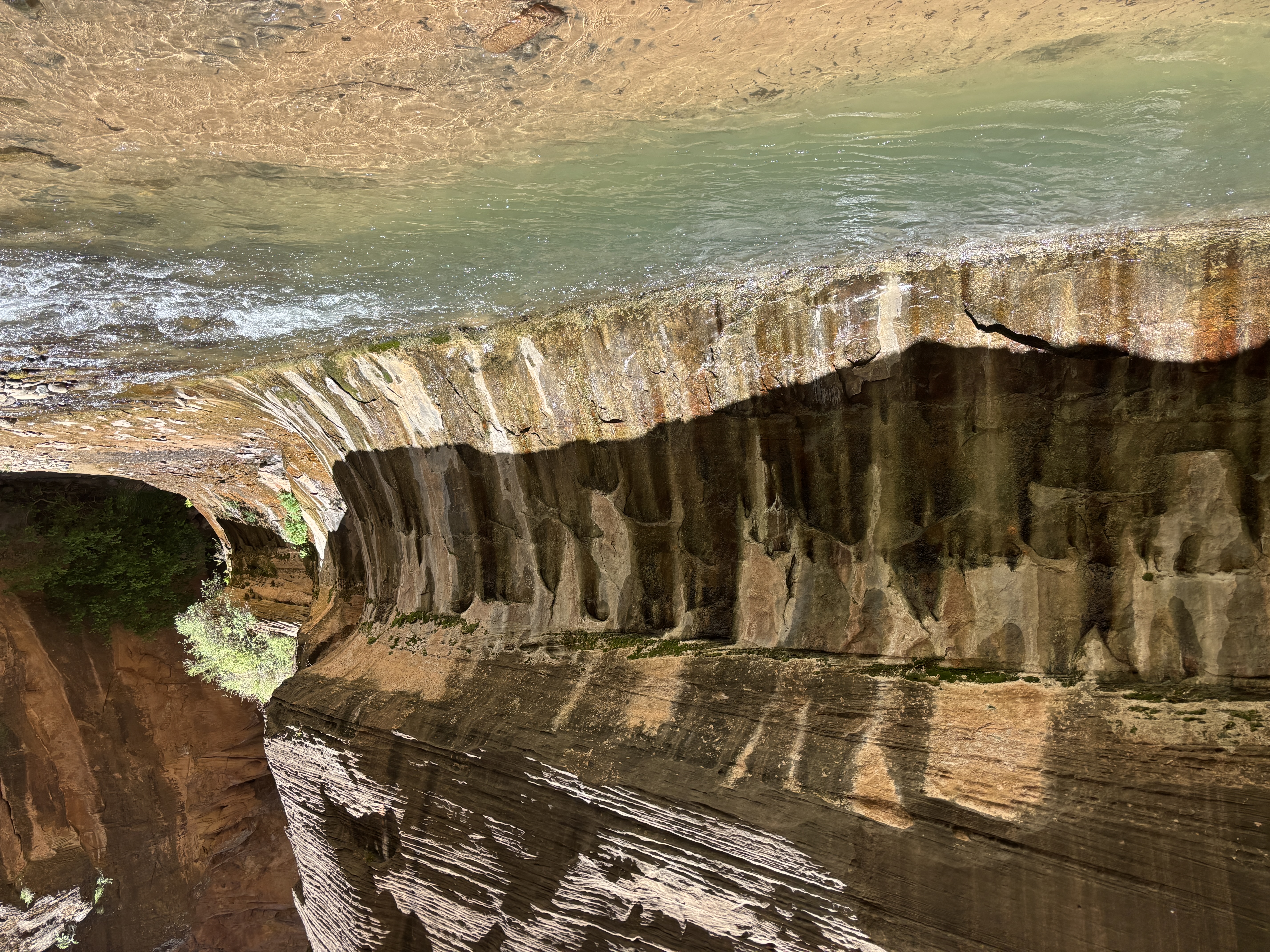
The Narrows is no ordinary hike as there is no trail, you will literally hike the river with all its obstacles. Your path leads over slippery rocks and through the icy current of the North Fork of the Virgin River. The deeper you get into the canyon, the more, the walls close on you. It is an almost religious feeling, as if you could touch creation itself. It has been rated as one of the best 10 hikes on earth and having completed it, I completely agree. It is so unlike every hike I have done before.
I hiked The Narrows top to bottom in the end of May. In this podcast episode I talk about my preparations, what to bring and about the experience.
Preparations
If you want to hike The Narrows top to bottom, you will need to book. shuttle from the Visitor Center to Chamberlain’s Ranch, which is the trailhead for The Narrows. The shuttle cost 60 US$ per person and you will need to have three people minimum. There are normally four shuttles a day and you can book your space online.
You will need a wilderness permit which you only get directly from the Visitor’s Center. I tried to get mine online but failed. They will also assign you a camping spot. There is a total of 12 spots, each designed for a certain number of people. Technically you could hike The Narrows in one day, but then you will need to start early and clog the whole 26 km in one go in order to catch the last Shuttle bus around 8 pm in the evening to bring you back to your car.
The whole hike is only 26 km long, but never forget, you won’t be able to hike it in a straight line. As you hike the river, you will actually zigzag your way down and long many more kilometres. My gps devise told me, I hiked more than 50 km in two days. I am not sure that it is 100% correct, as the signal was not always there, but I certainly did many more than the said 26.
Also make no mistake, the hike is tiring and difficult. Your trail is the river and you will need to navigate small and larger rocks which are often slippery, deal with a lot of current and have wet feet all day long. The best feeling was, when I made camp and I took off my wet shoes and socks, dried my feet and put on dry socks. That was pure bliss!
You can hire hiking poles and neoprene shoes at the Zion Outfitter. A hiking pole is definitely recommended, I picked up a piece of wood on the way as I forgot to bring one. Whether you need the neoprene shoes is debatable. Your feet will get wet, regardless. I thought it over for quite some time. I did not want to hike in my hiking boots as I correctly feared, they would not dry up quickly enough. Neither did I want to hike in neoprene water shoes as they have thin soles and are not designed for long hikes on uneven ground. In the end I packed some sturdy running shoes with a good profile as not to slip on the uneven ground or slippery stones and rocks. They did the trick and dried fairly well overnight, only to get we again the following morning when I set out again.
Before the hike I had purchased a waterproof backpack. I had read that the river at some points would be chest-deep to swimming. I hiked The Narrows when the water levels were quite low, so there were only 2-3 times when the backpack was really in the water , yet I was happy that I did not have to worry about clothes or stuff getting wet. Some of the other hikers, wrapped their stuff in plastic bags, but the waterproof backpack was so much more comfortable and easy.
Whenever you are planning to hike The Narrows top to bottom, make sure you check the weather. The staff at the Visitor’s Center from where you will get the permit, will also give you a weather report which includes the likelihood of flash floods. Flash floods are the main source of danger in the narrow sections of the canyon. But you should not underestimate the risk of slipping and injuring your ankle or foot.
There is no mobile coverage inside the canyon. While there are plenty of hikers in the lower part of the canyon, there are not so many in the upper part. So it is best to hike it with a friend or in a small group
Also, the water inside the river is often contaminated with cyanobacteria, so it is not suitable for consumption. You will need to carry all the water you need for the trip. Some of the water from springs are safe, but I personally did not take the risk. The rangers warn you particularly about the water problem.
You are allowed to take a camping stove, but as I only camped out for one night, I decided against it. I prefer to hike light and only take what is strictly necessary. There is however a zero waste policy inside the canyon. You have to pack and take with you all waste, including your own. As a result, the canyon is really clean and pristine.
Pack List/Important Things to consider before
- Wilderness Permit required to hike top to bottom
- Arrange a shuttle to get to the trail head
- Camping gear
- Suitable shoes/boots which are quick to dry but give you a secure footing
- Hiking pole
- Waterproof backpack
- Warm clothes for cold or damp nights (check-out the forecast and keep in mind that the inside of the canyon is colder than the surrounding countryside)
- Enough water to last for the entire hike
- Waterproof cellphone case
- Neoprene socks in case of cold temperatures
- Dry pants or or suit (if you attempt the hike during colder months)
All in all, it was definitely a lifetime adventure and I can recommend it for anyone who loves hiking and does mind getting their feet wet!
I found this map which only shows the lower part, but the tips are definitely helpful!
